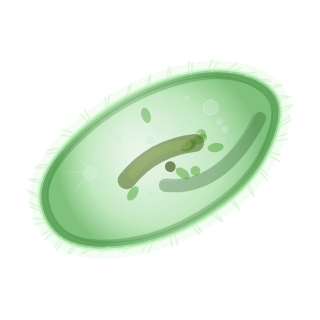
Hundreds of organisms swim in a drop of pond water, and you do not need expensive equipment to see them. With a school light microscope and a little patience you can watch paramecia, euglenas, diatoms and, if you are lucky, a tardigrade. This guide is for first-time microscope users.
What you need
| Eyepiece (ocular) | The lens you look into; usually 10×. |
|---|---|
| Objectives | The three or four lenses on the rotating nosepiece: usually 4×, 10×, 40× (and a 100× oil lens). |
| Stage and clips | The flat surface the slide sits on; the clips hold it in place. |
| Coarse and fine focus knobs | The big knob focuses roughly, the small one finely. |
| Diaphragm and light | Controls how much light comes from below; dimming it a little makes clear, living samples stand out. |
Step by step
- Set up the microscope. Put the microscope on a steady, level table and switch on the light. Click the smallest objective (4×) firmly into place.
- Prepare the slide. Put a single drop of water in the middle of a clean slide. Touch a cover slip to the edge of the drop at 45° and lower it slowly so no air bubbles are trapped. Soak up any overflow from the edge with a paper towel.
- Place the slide on the stage. Clip the slide on the stage so the drop sits right over the light hole.
- Bring the objective close while watching from the side. Without looking through the eyepiece, watch from the side and use the coarse knob to bring the objective close to the slide (or raise the stage). It must not touch the slide.
- Focus by moving away. Now look through the eyepiece and turn the coarse knob the other way, moving the objective away from the slide. When the image appears, sharpen it with the fine knob. This order protects the lens and the slide.
- Adjust the light. Most living things are transparent. Closing the diaphragm a little and dimming the light makes their edges clearer.
- Increase the magnification. When you find something interesting, move it to the centre of the view, then turn the nosepiece to the 10× and 40× objectives. Focus only with the fine knob; never use the coarse knob at high magnification.
- Record what you see. Draw what you see inside a circle and note the magnification and date. Find it in the encyclopedia. You can also take a photo by holding a phone camera to the eyepiece.
How do you work out total magnification?
Multiply the eyepiece magnification by the objective magnification. A 10× eyepiece with a 40× objective gives 10 × 40 = 400 times. A paramecium (about 0.2 mm) then looks like an 8-centimetre object.
Common mistakes
- Starting at high magnification: finding anything becomes very hard. Always start at 4×.
- Turning the coarse knob at 40×: the objective can crack the slide.
- Too much water: the cover slip floats and organisms drift. One drop is enough.
- Light fully open: transparent organisms disappear.
- Organisms swimming too fast: add a few cotton fibres to the drop; they slow down among the fibres.
No microscope?
Even cheap clip-on droplet lenses for phone cameras (about 15–30×) show water fleas and large ciliates. You can also try the 🔬 microscope view (bright field, dark field, phase contrast) in the game Organizma.
Not sure where to get a sample? See the next guide: Growing microbes at home with a hay infusion.
This guide is for general information. Bu sayfanın Türkçesi.