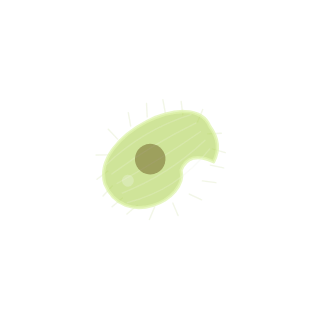
Millions of microbes sleep as cysts or spores on dry hay, dry leaves and in soil. Add water and within days they wake up and multiply. This simple experiment, done since the 17th century, is the best source of samples for a school microscope.
What you need
| A clean jar | A half-litre or one-litre glass jar with a lid. |
|---|---|
| A handful of dry hay or dry grass | Pet-shop hay, dried grass clippings or a few dry lettuce leaves all work. |
| Water | Pond or rain water is best; if you use tap water, leave it in an open container for a day so the chlorine escapes. |
| Optional | A spoonful of pond mud or a water plant: more species will appear. |
Step by step
- Boil the hay (optional). Boil a handful of hay in a glass of water for 5–10 minutes and let it cool. This releases food for bacteria. If you do not want to boil it, just put the hay in water.
- Fill the jar. Put the hay and its water in the jar and top it up with water. Add a spoonful of pond water or mud if you have it.
- Put it somewhere warm and bright. Leave the lid loose or cover it with a cloth with holes. A warm, bright windowsill out of direct sun is ideal.
- Sample the surface and bottom every day. Take one drop from the film on the surface and one from the bottom with a dropper and look at them at 40× and 100×. Note what you see with the date.
What will you see day by day?
- Days 1–2: The water turns cloudy and a thin film forms on top: millions of bacteria.
- Days 2–4: Small flagellates that eat bacteria (Bodo) and fast, kidney-shaped colpodas.
- Days 4–8: Paramecia multiply; vorticellas bounce on their stalks.
- Weeks 1–3: Green euglenas and algae on the bright side; with luck, rotifers, amoebae and the Didinium that hunt them.
Safety
- Do not drink the water and wash your hands with soap afterwards.
- A bad smell is normal (bacteria use up the oxygen); do not seal the lid tight.
- When you are done, pour the water on the garden or down the toilet, not the kitchen sink.
- Young children should do it with an adult.
A bit of history
For centuries people thought living things appeared "spontaneously" in hay water. In the 1860s Louis Pasteur showed that nothing grew in broth that was boiled and kept from contact with outside air, proving that life comes only from life. The organisms in a hay infusion really come from cysts and spores on the hay.
When your sample is ready, learn to use the microscope: How to use a microscope.
This guide is for general information. Bu sayfanın Türkçesi.