
An elegant marine single cell with a glass skeleton that lasts for millions of years on the ocean floor.
🦠 See it in Organizma and playFact file
| Scientific name | Radiolaria |
|---|---|
| Group | Radiolaria (Rhizaria) |
| Size | Mostly 0.1–0.2 mm; colonies can reach several centimetres |
| Habitat | Open-ocean plankton, from the surface to the depths |
| Feeding | Small plankton; some get food from algae living inside them |
| Movement | Passive drifting; rays and internal vacuoles keep it afloat |
| Reproduction | Division; flagellated spores in some species |
How does it live?
A radiolarian lives inside an extremely ornate skeleton made of opal-like silica (glass). Fine rays reaching out from the skeleton both catch prey and help the cell float.
In many species, small photosynthetic algae live in the cytoplasm; the radiolarian gives them shelter and the algae give it food.
When the cell dies its skeleton slowly sinks to the bottom. In some parts of the ocean most of the floor is radiolarian ooze made of these skeletons.
Fun facts
- The most famous plates in German biologist Ernst Haeckel's 1904 book Kunstformen der Natur (Art Forms in Nature) are radiolarians.
- Their fossils go back to the Cambrian, about 500 million years ago, and help geologists date rocks.
- Each of the thousands of known species has its own skeleton shape, so species are often told apart by their skeleton alone.
In the game Organizma
In Organizma the Radiolarian species is drawn with its spiny skeleton. Small mini radiolarians drift through the water as micro-creatures.
🦠 Play📺 Watch in screensaver modeGame vs. reality
- In the game: In the game organisms collect the genes of what they eat.
In reality: In reality genes are mostly passed from parent to offspring. Close parallels to getting genes from food are rare: horizontal gene transfer in bacteria, and a cell turning a swallowed alga into an organelle (endosymbiosis; this is how mitochondria and chloroplasts arose). - In the game: In the game you pick evolution cards while alive.
In reality: In reality an individual does not evolve during its life; mutations build up from generation to generation. The game's generation inheritance is therefore closer to reality.
Similar organisms
 ForaminiferaForaminiferaA single cell with a chambered chalk shell that spreads web-like false feet through its holes; its fossils are even in the stones of the pyramids.
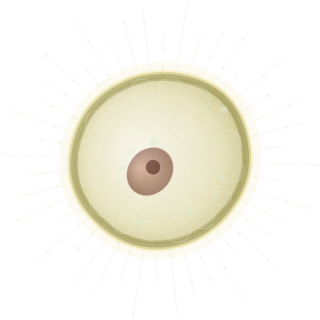 Heliozoan (sun animalcule)Actinosphaerium and ActinophrysA single cell that looks like a little sun with thin rays in every direction, and catches its prey with those rays.
 CoccolithophoreEmiliania huxleyi and relativesA tiny alga covered in chalk scales that turns the sea milky blue, visible from space, when it blooms.
This page is for general information; sizes and numbers vary by species, source and environment. The pictures are generated from the drawing code of the game Organizma and are simplified, game-like versions of the organisms. Bu sayfanın Türkçesi. Spotted a mistake? Let me know.