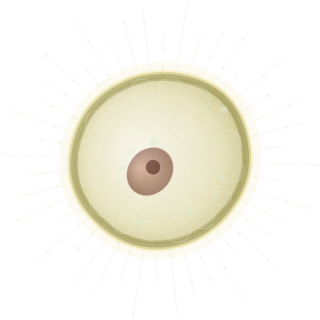
A single cell that looks like a little sun with thin rays in every direction, and catches its prey with those rays.
🦠 See it in Organizma and playFact file
| Scientific name | Actinosphaerium and Actinophrys |
|---|---|
| Group | Heliozoa (sun animalcules) |
| Size | From about 0.04 mm up to 1 mm |
| Habitat | Among freshwater plants in lakes and ponds |
| Feeding | Ciliates, flagellates and tiny animals |
| Movement | Mostly drifts; rolls very slowly on its rays |
| Reproduction | Binary fission |
How does it live?
Thin, stiff rays called axopods stick out in every direction from its round body. Inside each ray, bundles of microtubules act as a skeleton.
A small organism that bumps into the rays gets stuck on tiny sticky, toxic granules on their surface. The ray shortens and carries the prey to the body, which wraps it into a food vacuole. Several heliozoans can even fuse to digest a large prey together.
Fun facts
- The rays can be taken apart and rebuilt within minutes; they are a classic example of how dynamic the cell skeleton is.
- Despite its name it does not feed on light; the "sun" refers only to its looks.
In the game Organizma
In Organizma the Heliozoan species catches nearby food more easily with its rays.
🦠 Play📺 Watch in screensaver modeGame vs. reality
- In the game: In the game organisms collect the genes of what they eat.
In reality: In reality genes are mostly passed from parent to offspring. Close parallels to getting genes from food are rare: horizontal gene transfer in bacteria, and a cell turning a swallowed alga into an organelle (endosymbiosis; this is how mitochondria and chloroplasts arose). - In the game: In the game you pick evolution cards while alive.
In reality: In reality an individual does not evolve during its life; mutations build up from generation to generation. The game's generation inheritance is therefore closer to reality.
Similar organisms
 RadiolarianRadiolariaAn elegant marine single cell with a glass skeleton that lasts for millions of years on the ocean floor.
 AmoebaAmoeba proteusA single cell with no fixed shape that flows along on false feet and engulfs its prey.
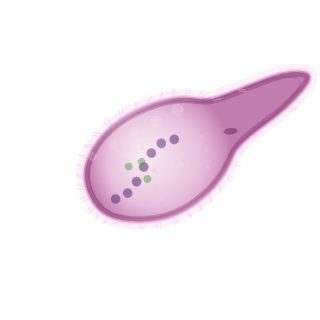 DileptusDileptus anserA swan-necked hunting ciliate that paralyses its prey with toxic darts along its long proboscis.
This page is for general information; sizes and numbers vary by species, source and environment. The pictures are generated from the drawing code of the game Organizma and are simplified, game-like versions of the organisms. Bu sayfanın Türkçesi. Spotted a mistake? Let me know.