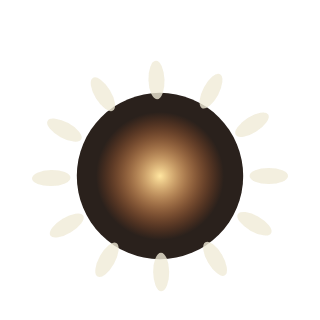
Microbes that feed a whole ecosystem in the lightless deep sea by making energy from chemicals pouring out of vents.
🦠 See it in Organizma and playFact file
| Scientific name | Chemosynthetic bacteria and archaea |
|---|---|
| Group | Bacteria and archaea (many groups) |
| Size | About 0.5–5 µm; form mats and filaments |
| Habitat | Deep-sea hot vents, cold seeps |
| Feeding | Chemosynthesis: oxidising substances such as hydrogen sulfide |
| Movement | Most stick to surfaces; some have flagella |
| Reproduction | Binary fission |
How does it live?
Mineral-rich water at hundreds of degrees gushes from vents on the ocean floor. The bacteria and archaea here make food from carbon dioxide using the energy of substances such as hydrogen sulfide, methane or hydrogen instead of light; this is called chemosynthesis.
These microbes cover the rocks in thick mats and feed the entire food chain of animals such as tube worms, mussels and shrimp. Some live as partners inside the animals' bodies.
Fun facts
- Hydrothermal vents were discovered in 1977; an ecosystem without light amazed biologists.
- Some archaea can multiply even above 120 °C.
- Some scientists think life may first have begun near vents like these.
In the game Organizma
The orange hot vents in Organizma's deep water are full of food: vent bacteria and the microbial mats (biofilms) they weave surround them. Near a vent the water is warmer and holds less oxygen.
🦠 Play📺 Watch in screensaver modeGame vs. reality
- In the game: In the game organisms collect the genes of what they eat.
In reality: In reality genes are mostly passed from parent to offspring. Close parallels to getting genes from food are rare: horizontal gene transfer in bacteria, and a cell turning a swallowed alga into an organelle (endosymbiosis; this is how mitochondria and chloroplasts arose). - In the game: In the game you pick evolution cards while alive.
In reality: In reality an individual does not evolve during its life; mutations build up from generation to generation. The game's generation inheritance is therefore closer to reality.
Similar organisms
 Anabaena (cyanobacterium)AnabaenaA photosynthetic cyanobacterium that forms bead-like threads and can fix nitrogen from the air.
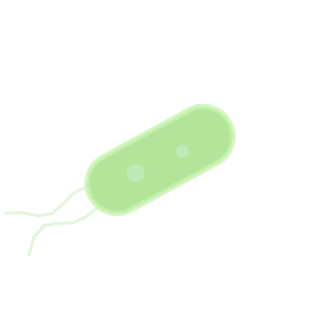 Bacillus (rod bacterium)Bacillus subtilisA rod-shaped bacterium of soil and water that turns into an almost indestructible spore in hard times.
 Noctiluca (sea sparkle)Noctiluca scintillansA giant dinoflagellate that flashes blue light when disturbed and makes waves glow at night.
This page is for general information; sizes and numbers vary by species, source and environment. The pictures are generated from the drawing code of the game Organizma and are simplified, game-like versions of the organisms. Bu sayfanın Türkçesi. Spotted a mistake? Let me know.